
Institutional Participation in Collaborative Climate Change Planning and Disaster Resilience Initiatives
Climate Action
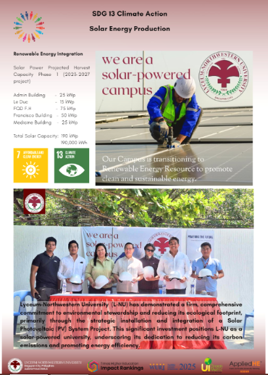

Lyceum-Northwestern University (L-NU) recognizes the importance of collaborative efforts in addressing climate change risks and strengthening community resilience against climate-related disasters. As part of its institutional commitment to environmental sustainability, the University promotes the transition toward renewable energy resources and the adoption of clean and sustainable energy practices. These initiatives contribute to reducing greenhouse gas emissions, minimizing environmental impacts, and supporting long-term climate change mitigation.
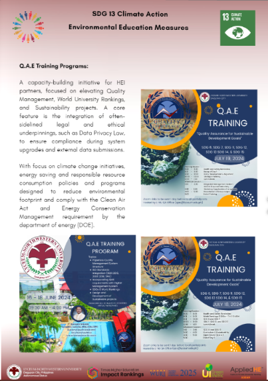
Through activities such as the Synergy Webinar and Quality Assurance for Sustainable Development Goals (SDGs), L-NU strengthens institutional awareness and understanding of climate change, environmental sustainability, and the role of higher education institutions in promoting climate action. These activities provide opportunities to exchange knowledge, discuss sustainable practices, and identify strategies for integrating environmental considerations into university operations and institutional development. The University also recognizes the importance of working with government agencies and other stakeholders to promote coordinated approaches to climate change mitigation, adaptation, and disaster preparedness.
In addition, L-NU’s transition toward renewable energy and its promotion of energy efficiency demonstrate its efforts to support broader climate resilience objectives. By encouraging sustainable energy practices and strengthening institutional capacity through sustainability-related activities, the University contributes to initiatives that address the environmental factors associated with climate change and support the development of more resilient communities.
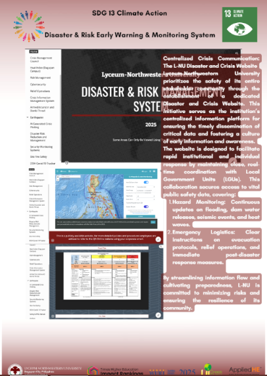
The impact of L-NU’s sustainability initiatives is reflected in their contribution to climate change awareness, environmental responsibility, and the promotion of sustainable institutional practices. Through renewable energy initiatives, sustainability webinars, and quality assurance activities aligned with the SDGs, the University encourages the adoption of practices that reduce carbon emissions and strengthen environmental resilience. These efforts also promote the importance of institutional cooperation and knowledge-sharing in addressing climate-related challenges that may affect vulnerable communities, including those at risk of displacement due to environmental disasters. Ultimately, L-NU’s initiatives support the University’s broader commitment to climate action and encourage a more sustainable and resilient future through institutional and community engagement.