
Collaboration with NGOs and Community Stakeholders on Climate Change Adaptation and Capacity Building
Climate Action
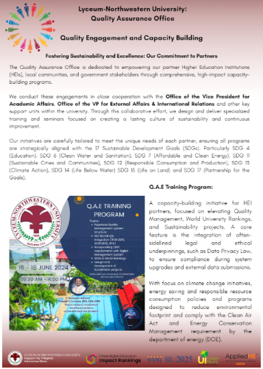

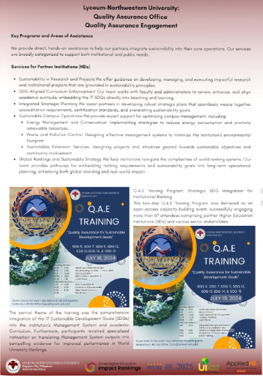
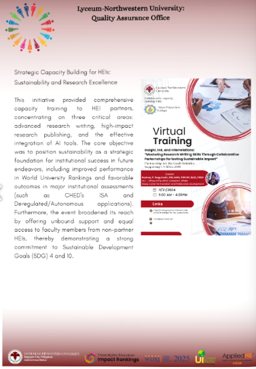
Lyceum-Northwestern University (L-NU) recognizes the importance of collaboration with non-governmental organizations (NGOs), local government units (LGUs), and community stakeholders in promoting climate change adaptation and strengthening community resilience. Through its Quality Engagement and Capacity-Building Initiatives, the University supports knowledge-sharing, institutional development, and community participation in addressing environmental and sustainability challenges.
As part of these efforts, L-NU conducts Quality Assurance Virtual Trainings and other capacity-building activities that promote the integration of sustainability principles into institutional practices and community initiatives. These engagements provide opportunities to strengthen awareness, share relevant knowledge, and encourage the adoption of sustainable approaches to environmental management and climate action. Through its community and LGU engagements, the University also promotes collaboration with external stakeholders in identifying local needs, addressing environmental concerns, and encouraging practical sustainability measures.
These initiatives reflect L-NU’s commitment to extending its sustainability efforts beyond the campus by fostering partnerships and strengthening the capacity of organizations and communities to respond to environmental challenges. By encouraging cooperation among educational institutions, NGOs, local government units, and other community partners, the University supports collective efforts toward climate change adaptation and sustainable community development.
The impact of L-NU’s quality engagement and capacity-building initiatives is reflected in the strengthened knowledge, awareness, and collaborative capacity of participating institutions and community stakeholders. Through virtual training, community engagement, and coordination with local government units, the University provides opportunities to exchange knowledge and promote sustainable practices that can help communities address climate-related challenges. These activities encourage stakeholders to recognize environmental vulnerabilities, consider appropriate adaptation measures, and incorporate sustainability into their respective programs and operations. Furthermore, collaboration with external organizations creates opportunities for shared expertise, coordinated interventions, and community-based solutions. Ultimately, these initiatives contribute to stronger institutional partnerships, improved community preparedness, and more inclusive approaches to climate change adaptation.