
LNU Strengthens Continuity of Its Hazardous Waste Management Program Through Sustained Environmental Compliance and DENR-Accredited Partnerships
Responsible Consumption and Production
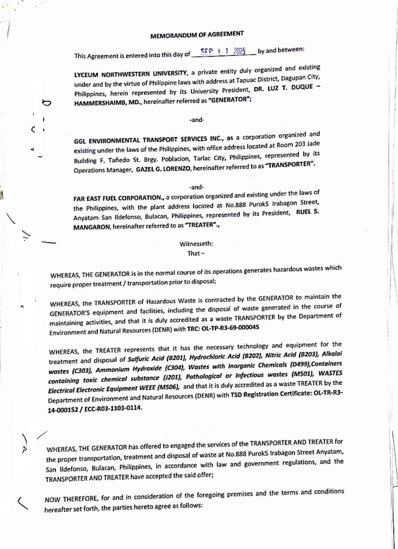
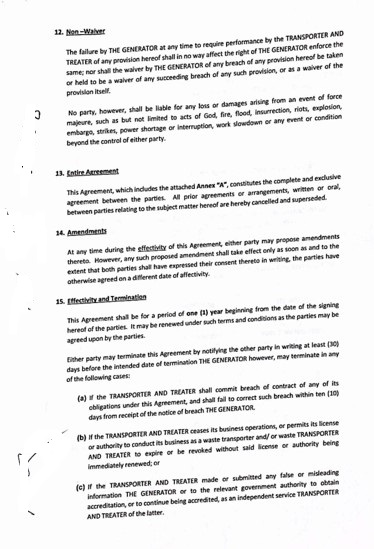
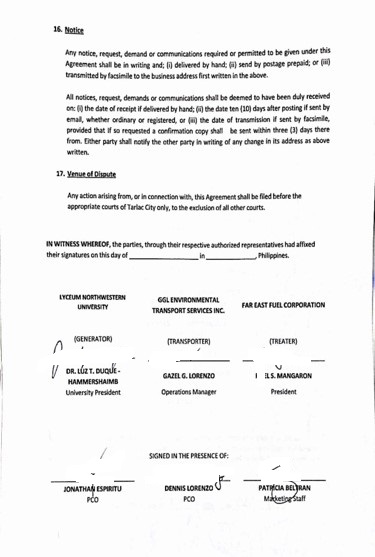
Lyceum-Northwestern University (L-NU) demonstrates its continuing commitment to responsible environmental management through the sustained implementation and improvement of its Hazardous Waste Management Program. Building on the Memorandum of Agreement (MOA) signed on September 11, 2025, the University maintains its partnership with DENR-accredited hazardous waste transporters and treatment providers to ensure the safe collection, transportation, treatment, and proper disposal of hazardous waste.
To ensure the program’s long-term effectiveness and regulatory compliance, LNU continues to implement the following initiatives:
- Sustained Hazardous Waste Collection and Disposal – Maintain scheduled collection and proper disposal of hazardous waste through DENR-accredited service providers.
- Regular Waste Inventory and Documentation – Continuously update records of hazardous waste generation, classification, storage, collection, and disposal to ensure accountability and traceability.
- Improved Waste Segregation and Storage – Strengthen proper labeling, segregation, containment, and designated storage practices to prevent environmental contamination and health risks.
- Continuous Environmental Compliance Monitoring – Regularly review waste management procedures, permits, accreditation documents, and disposal records in accordance with RA 6969 and applicable DENR regulations.
- Environmental Awareness and Capacity-Building – Conduct continuing environmental awareness activities and training for students, faculty, laboratory personnel, maintenance staff, and other university stakeholders.
- Sustained Institutional Partnerships – Strengthen coordination with accredited hazardous waste transporters and treatment facilities to ensure uninterrupted and compliant waste management services.
- Periodic Program Evaluation and Improvement – Assess program effectiveness and enhance existing procedures in response to operational requirements, regulatory updates, and emerging environmental management practices.
Through these continuing initiatives, LNU aims to minimize environmental contamination, safeguard public health and campus safety, prevent improper hazardous waste disposal, and strengthen institutional environmental accountability. The program reinforces the University’s commitment to its 2023–2030 SDG Road Mapping Policy, particularly SDG 12 (Responsible Consumption and Production), while contributing to SDG 3 (Good Health and Well-being) and SDG 6 (Clean Water and Sanitation).