
University-Wide Climate Action Plan Through Energy Efficiency, Carbon Management, and Greenhouse Gas Emissions Reduction
Climate Action

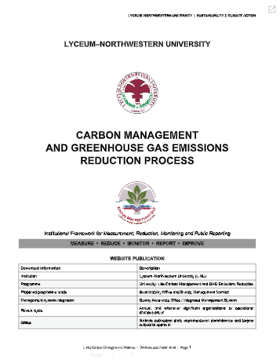
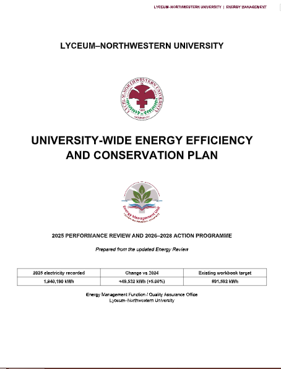
Lyceum-Northwestern University (L-NU) demonstrates its commitment to addressing climate change through its University-Wide Energy Efficiency and Conservation Plan, which serves as an institutional framework for promoting responsible energy use, reducing environmental impacts, and strengthening the University’s sustainability practices. The plan incorporates energy conservation measures, carbon management strategies, and processes for monitoring and reducing greenhouse gas (GHG) emissions across university operations. It supports the University’s commitment to national environmental policies and the United Nations Sustainable Development Goals, particularly SDG 7 (Affordable and Clean Energy), SDG 11 (Sustainable Cities and Communities), and SDG 13 (Climate Action).
Through this plan, L-NU promotes the efficient use of electricity and other energy resources across its academic buildings, administrative offices, and campus facilities. The University also undertakes carbon management and greenhouse gas emissions reduction initiatives by monitoring energy consumption, identifying sources of carbon emissions, and implementing measures to minimize its environmental footprint. These efforts encourage energy-conscious practices, responsible resource utilization, and the gradual transition toward cleaner and more sustainable energy sources.
In addition to its internal sustainability measures, L-NU recognizes the importance of sharing environmental knowledge and encouraging collective climate action beyond the campus. Through its sustainability engagement initiatives, including the Energy Performance Initiative Cooperation (E.P.I.C.), the University provides opportunities for collaboration, technical assistance, and knowledge-sharing with partner Higher Education Institutions (HEIs), Local Government Units (LGUs), and community stakeholders. These engagements help promote the adoption of energy efficiency, carbon management, and emissions reduction practices among partner institutions and local communities.
The impact of L-NU’s University-Wide Energy Efficiency and Conservation Plan is reflected in its efforts to institutionalize climate-conscious practices and strengthen environmental responsibility across its operations. By establishing processes for energy monitoring, carbon management, and greenhouse gas emissions reduction, the University can identify areas for improvement, minimize unnecessary energy consumption, and develop more effective strategies for reducing its carbon footprint. Furthermore, through collaboration and knowledge-sharing with local government units, partner institutions, and community stakeholders, L-NU extends its sustainability efforts beyond the campus and encourages broader participation in climate action. These initiatives contribute to improved energy efficiency, reduced environmental impacts, and stronger local capacity to address climate change. Ultimately, L-NU seeks to foster a more sustainable and climate-resilient university and community.