Responsible Handling of Hazardous Waste at LNU
Responsible Consumption and Production
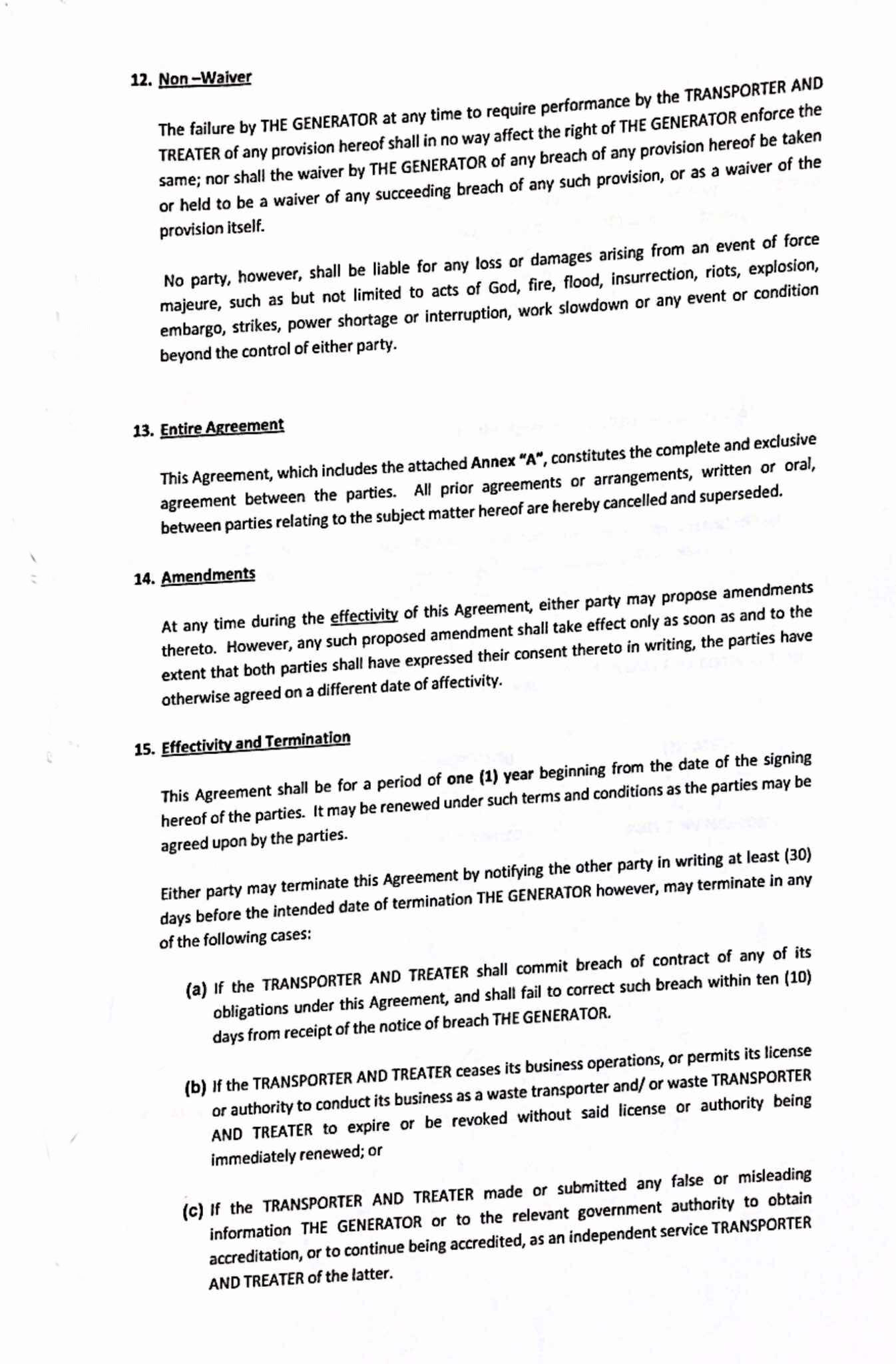
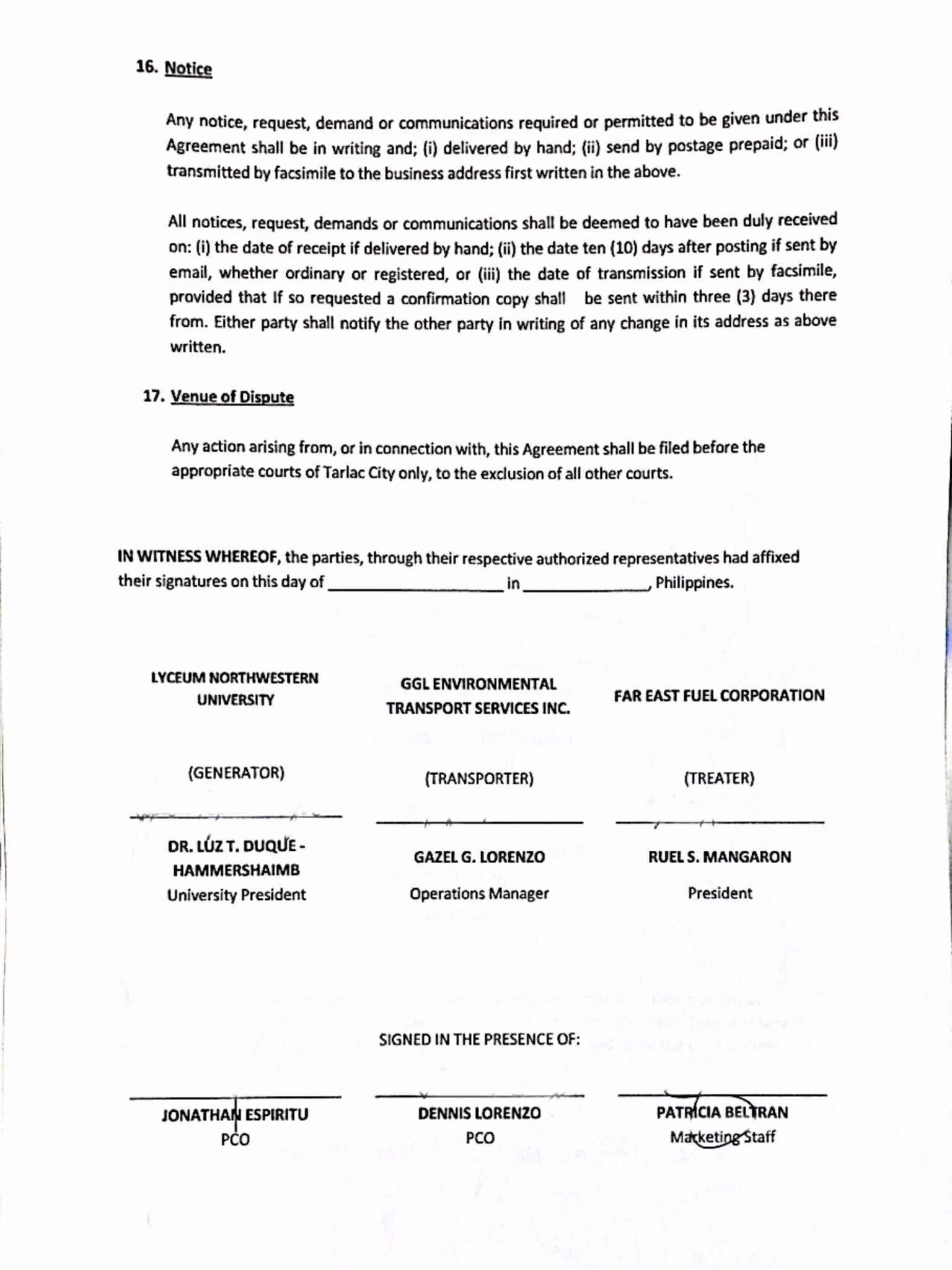
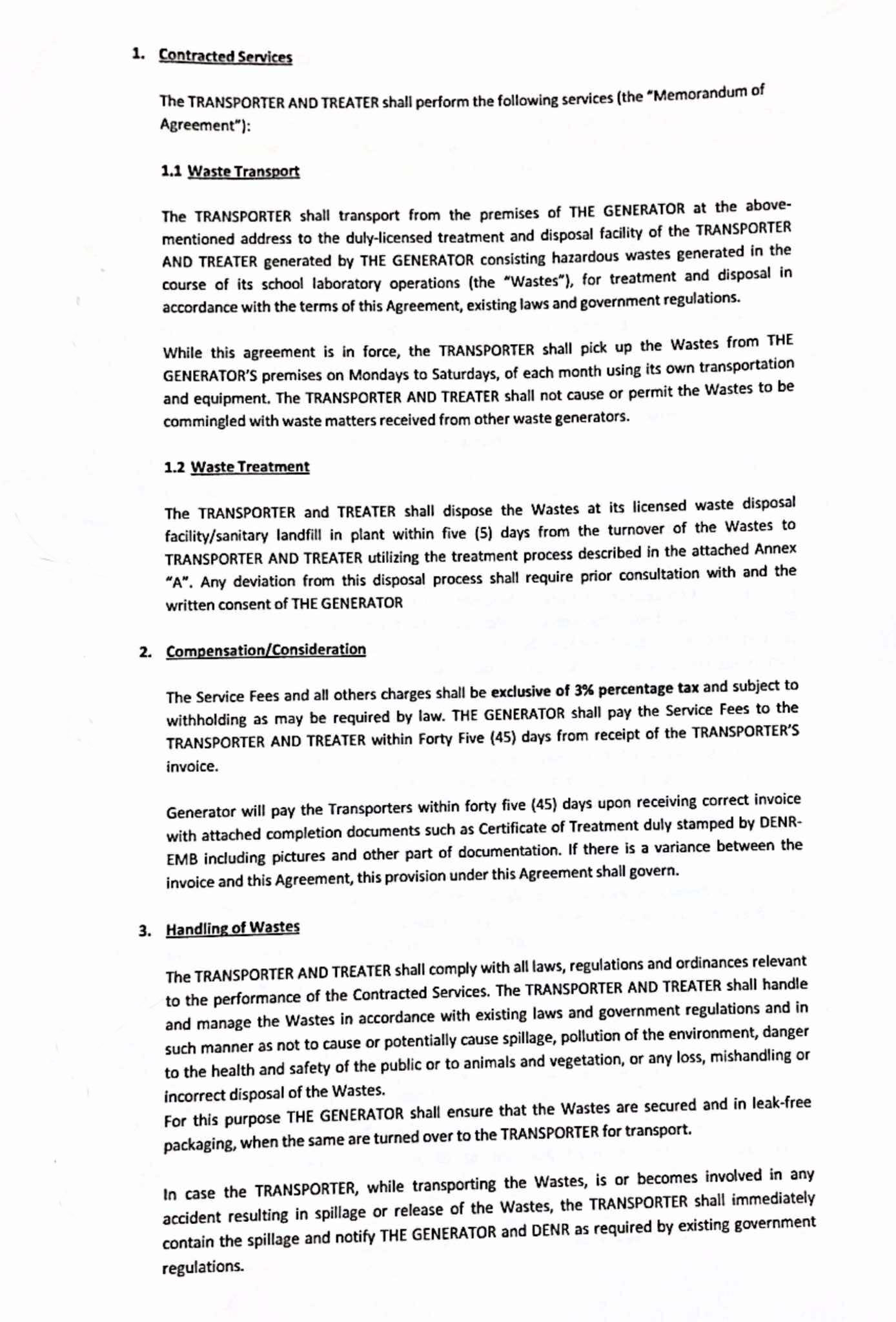
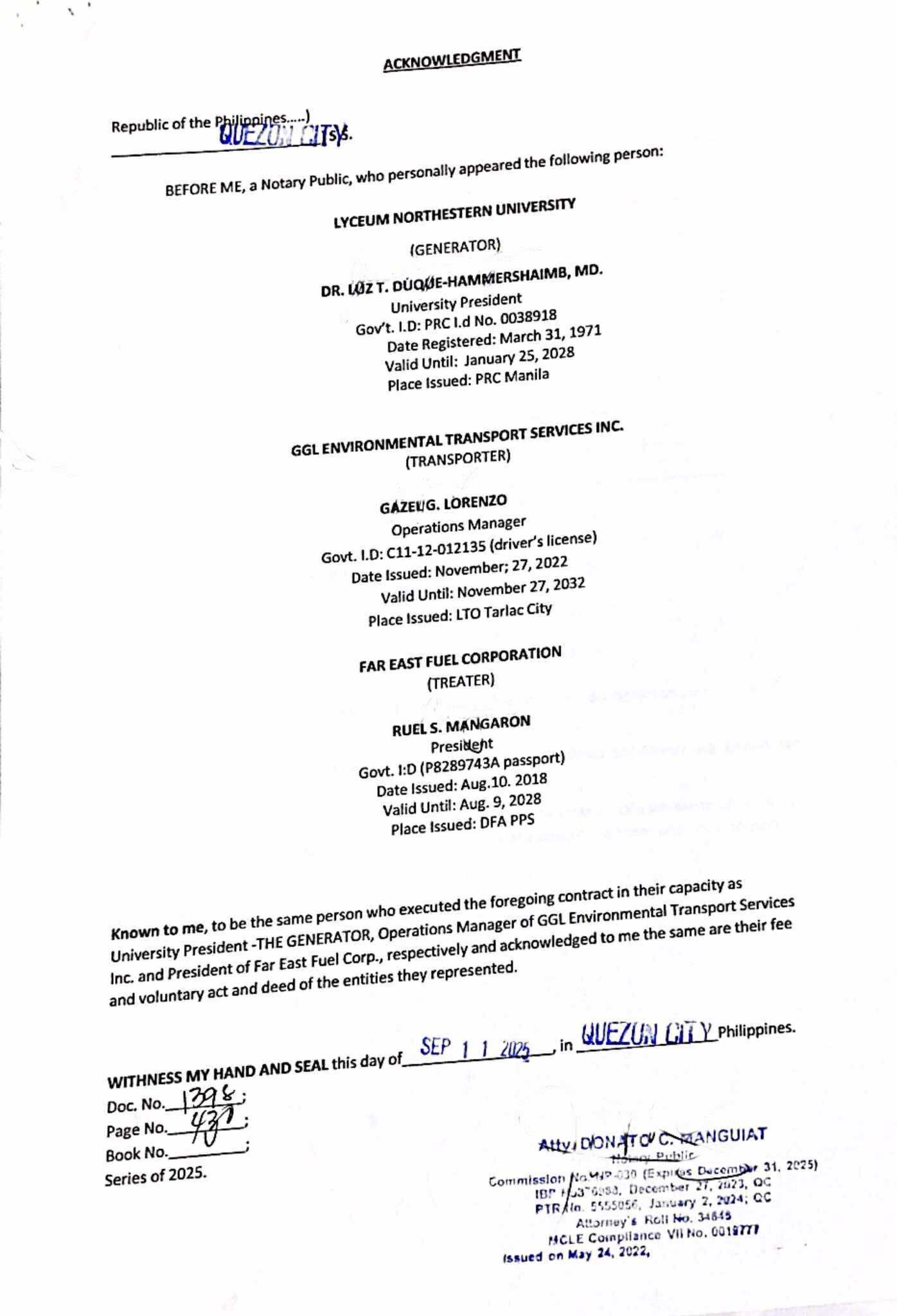
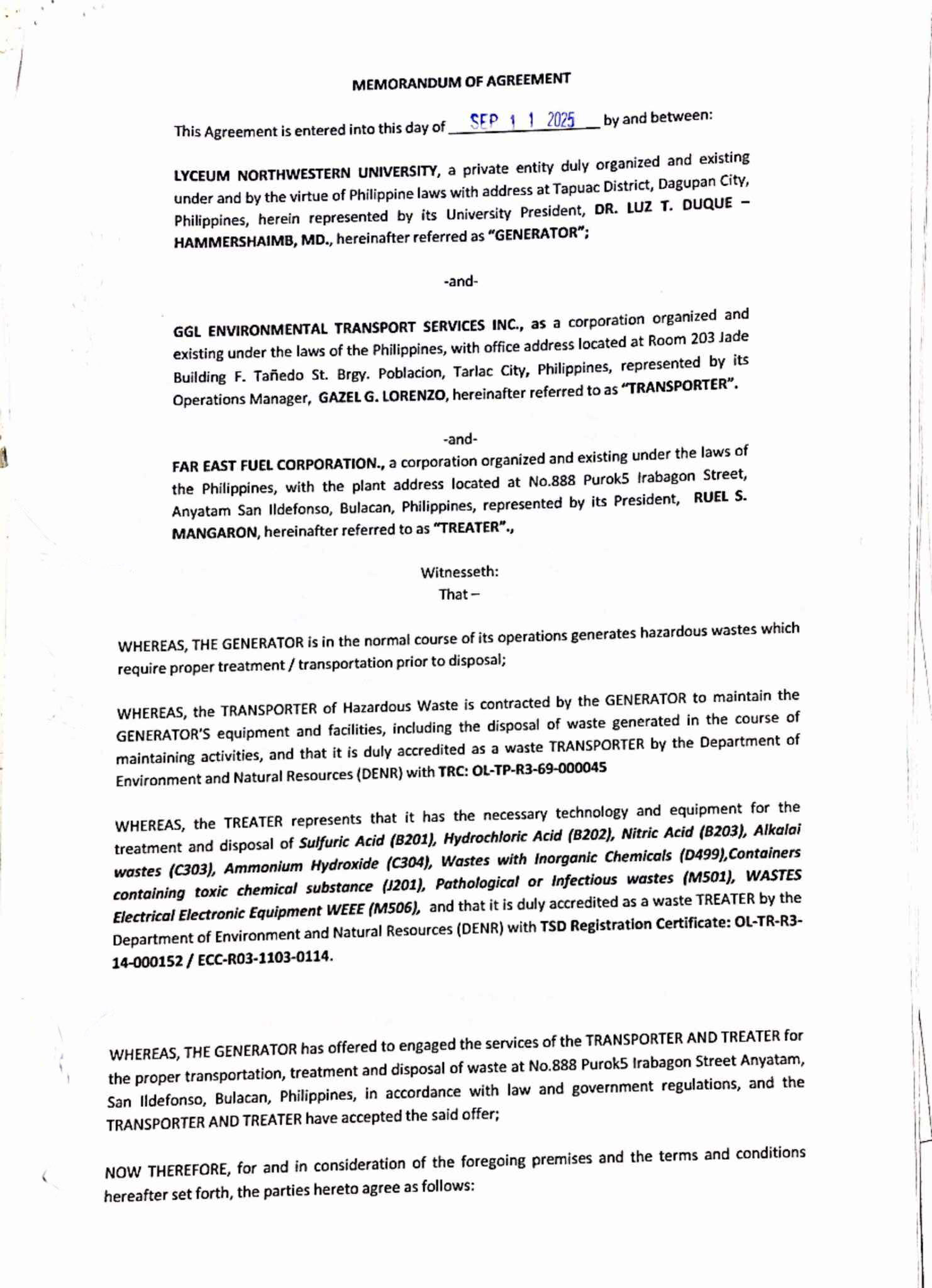
Lyceum-Northwestern University (L-NU) maintains a formal and legally compliant process for the safe management, transport, and disposal of hazardous waste generated by its operations. This process is governed through an officially executed Memorandum of Agreement (MOA) signed on September 11, 2025 by the University President, Dr. Luz T. Duque-Hammershaimb, together with accredited hazardous waste service providers.
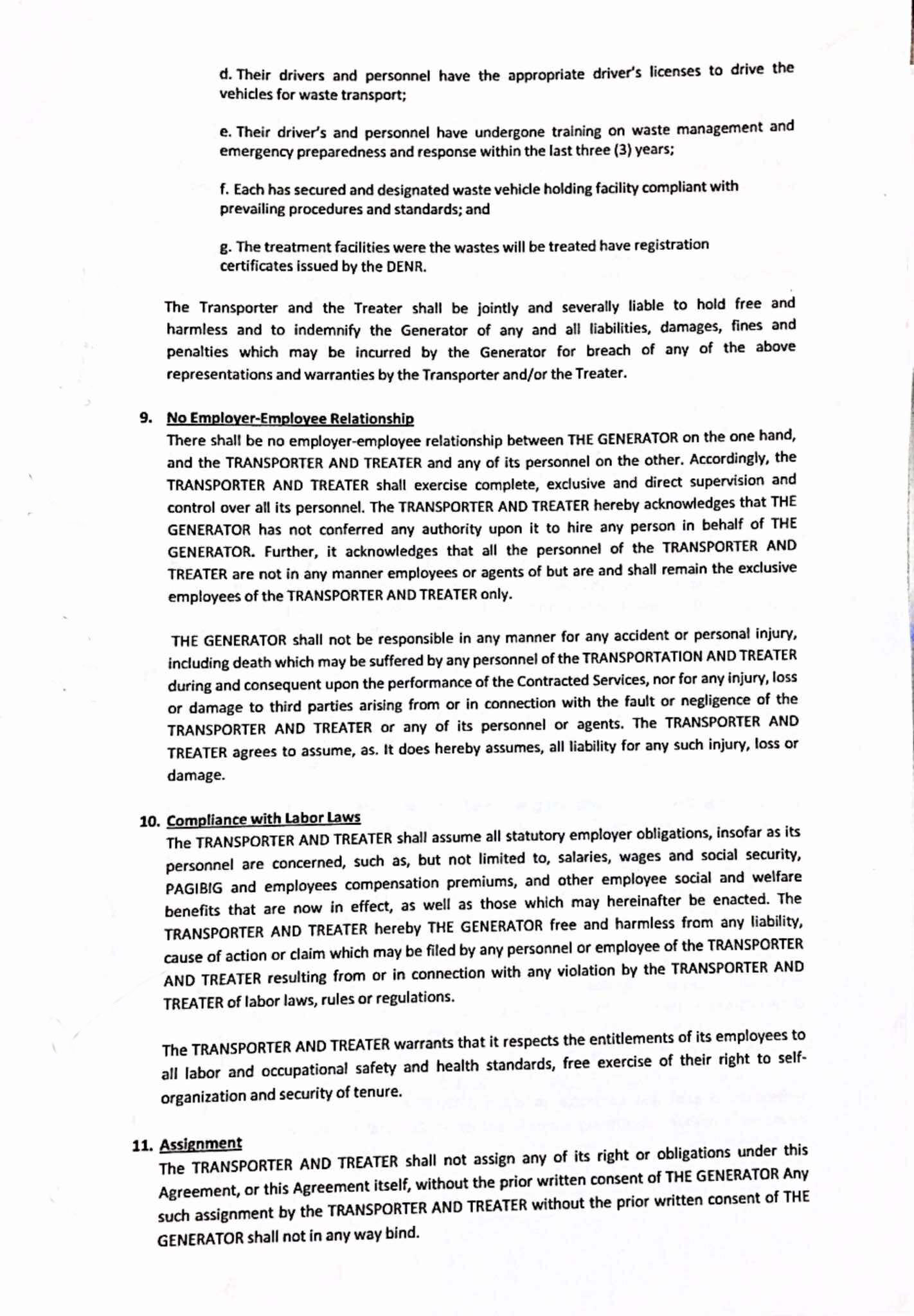
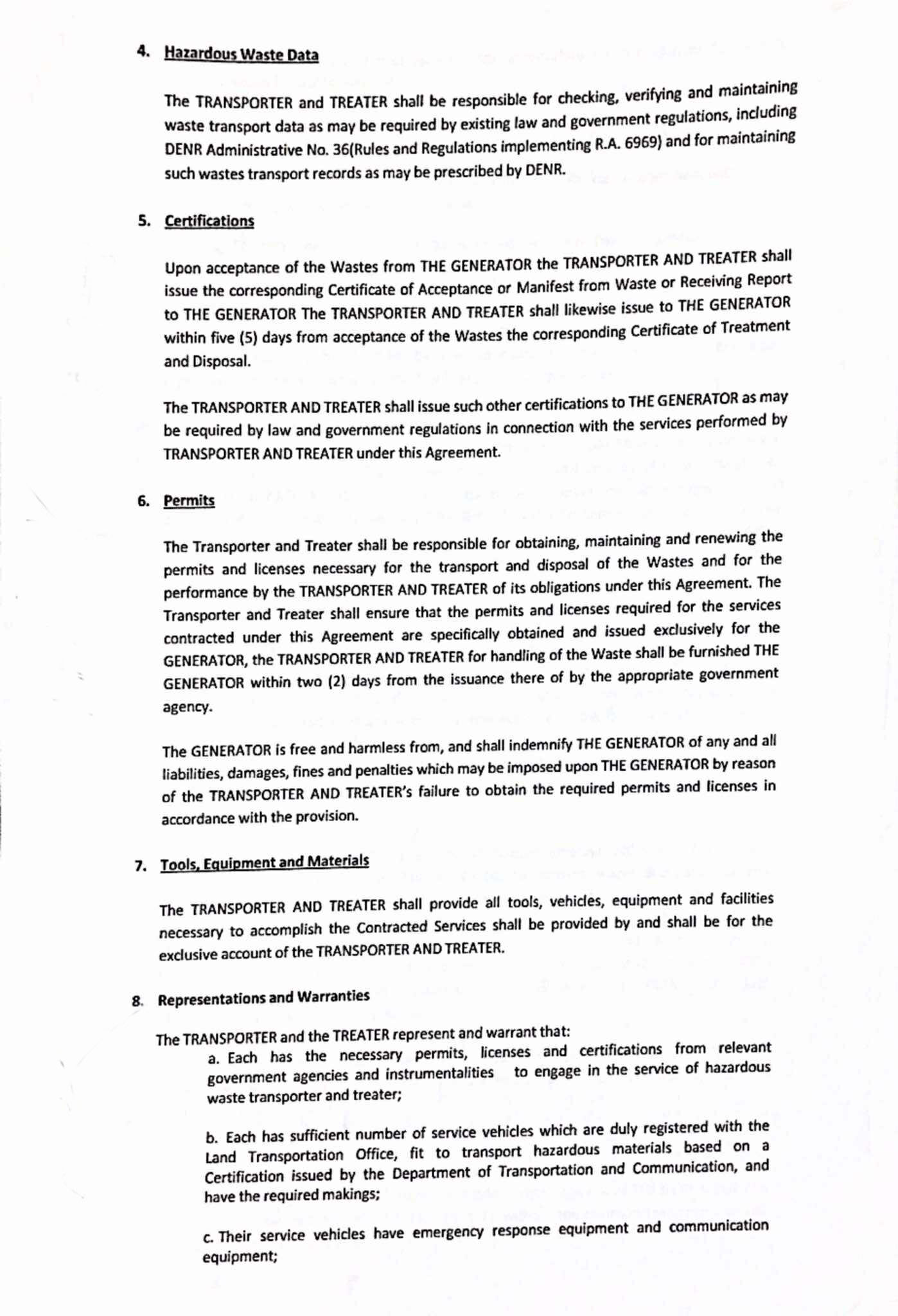
Under this agreement, L-NU is designated as the “Generator” of hazardous waste and partners with GGL Environmental Transport Services Inc. as the “Transporter” and Far East Fuel Corporation as the “Treater.” Both entities are fully accredited by the Department of Environment and Natural Resources (DENR) and possess valid Transporter Registration Certificates (TRC) and Treatment, Storage, and Disposal (TSD) Certificates, ensuring strict adherence to national environmental laws.
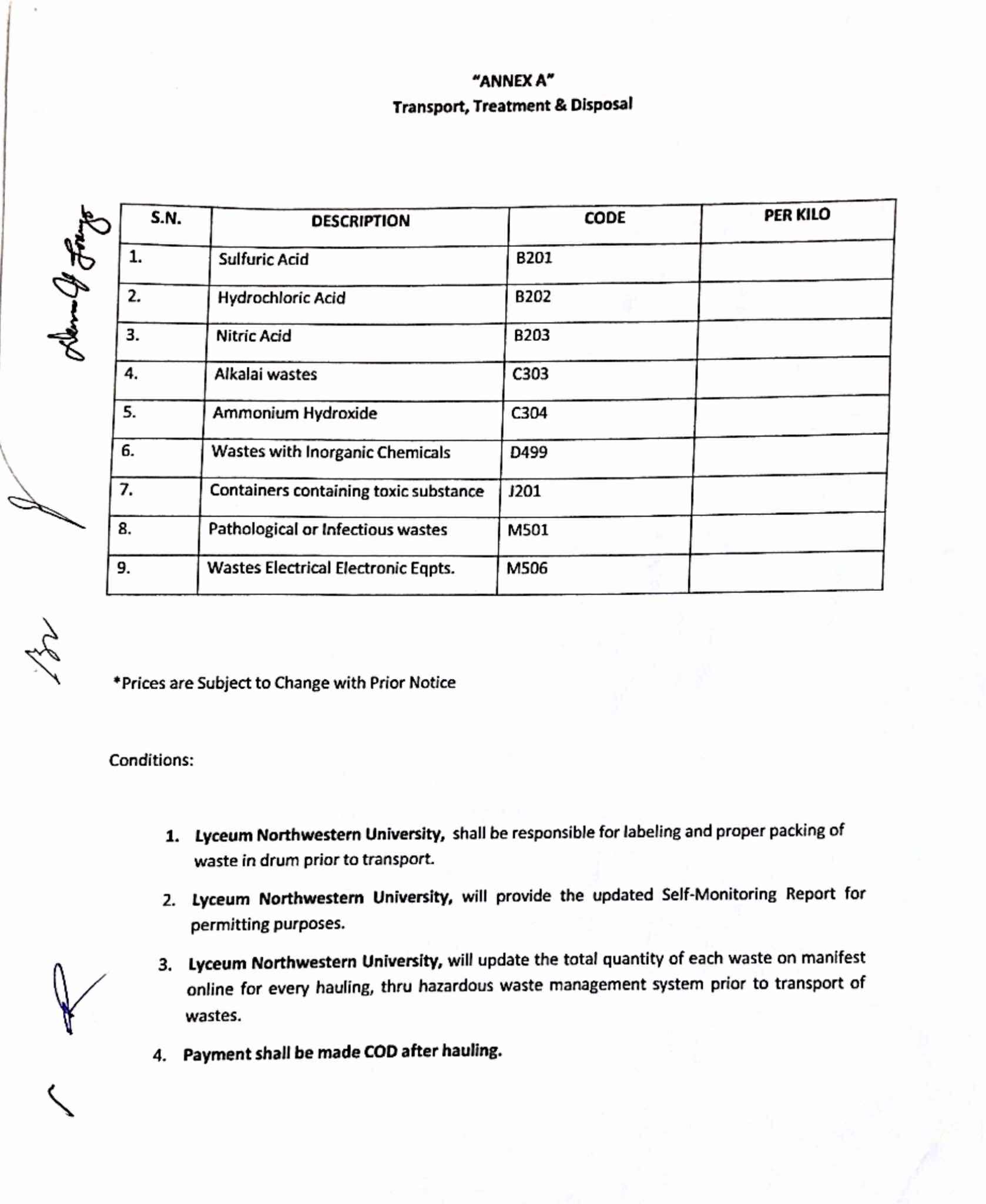
The policy covers the responsible handling of multiple categories of hazardous materials, including but not limited to:
∙Sulfuric Acid (B201)
∙Hydrochloric Acid (B202)
∙Nitric Acid (B203)
∙Alkali Wastes (C303)
∙Ammonium Hydroxide (C304)
∙Wastes with Inorganic Chemicals (D499)
∙Containers with Toxic Chemical Substances (J201)
∙Pathological or Infectious Wastes (M501)
∙Waste Electrical and Electronic Equipment (WEEE – M506)
The partnership ensures that all hazardous wastes produced by the University are:
1.Properly documented and monitored during collection and storage;
2.Transported safely by DENR-accredited professionals following national regulatory standards;
3.Treated and disposed of using approved technologies at certified hazardous waste facilities; and
4.Managed in full compliance with Republic Act 6969 (Toxic Substances and Hazardous and Nuclear Wastes Control Act) and its implementing rules.
Through this policy and formal agreement, L-NU demonstrates a strong institutional commitment to environmental responsibility, regulatory compliance, and the safe management of hazardous materials. This forms a major component of the University’s sustainability initiatives under its 2023–2030 SDG Road Mapping Policy, contributing directly to SDG 12: Responsible Consumption and Production.